Facelift with Fat Transfer in Tijuana, Mexico
A lift repositions what has dropped; fat restores what has hollowed. One plan, one recovery.

No image on this page depicts an actual patient or a surgical result. Editorial photography is used for illustration only.
Facelift combined with grafting of your own fat, performed by Dr. Alfredo Chama, plastic surgeon board-certified by the Mexican Council of Plastic Surgery (CMCPER No. 2607), about 20 minutes from the San Ysidro border crossing.
What it’s for
What a facelift with fat transfer is for, and what it isn’t
Two separate things happen to a face over time: tissue descends and volume drains away. A facelift addresses the first; fat transfer addresses the second. That is why the two are often planned together.
The facelift repositions the deeper support layer (the SMAS) and redrapes the skin without over-tightening it — which is what keeps the result from looking pulled. The exact technique Dr. Chama uses in your case is decided at consultation.
Facial fat grafting takes a small amount of fat from your own body — usually the abdomen or thighs — purifies it, and places it in the cheeks, temples, folds and jawline. It is your own tissue; nothing synthetic goes in.
Benefits
What it changes
- Rested, not “done”: the lift moves structure, not just skin; the fat softens rather than over-fills.
- Your own fat: no synthetic material and no foreign implant in the face.
- One surgery, one recovery: a single anesthesia and a single downtime instead of two.
- Two causes of aging treated at once: descent and hollowing are addressed in the same session.
Candidacy
Who is typically a candidate, and who should wait
- ✓ Sagging in the mid or lower face and volume loss in the cheeks, temples or folds.
- ✓ Stable weight.
- ✓ Non-smoker, or willing to stop before and after surgery.
- ✓ Realistic expectations: looking rested and like yourself, not like someone else.
- ✓ Able to stay in Tijuana for the first days of recovery and return for follow-up, in person or virtually.
When the combination is not the right call: sagging alone may only need a lift; hollowing alone may be handled with fat grafting or fillers. Dr. Chama makes that call in consultation.
Consultation
Virtual or in-person assessment of your case
Preparation
Personalized plan, labs, and pre-op instructions
Procedure
Hospital setting, board-certified team
Recovery
Follow-up in person or remotely from the U.S.
How the process works, step by step
- Virtual consultation. Send photos and a short description through WhatsApp; Dr. Chama reviews whether the combination fits you, or whether a lift or fat alone would do.
- Plan. Technique, fat donor and recipient areas, anesthesia type (general or IV sedation, decided with the anesthesiologist), and your travel dates.
- Surgery in Tijuana. In a certified hospital setting, under general anesthesia or IV sedation. Temporary drains may be used.
- First follow-up. Dressings and any drains are removed on schedule before you head home; you leave with written care instructions.
- Cross-border follow-up. Virtual check-ins from California or wherever you live, with in-person visits when needed.
Your stay and follow-up (for patients crossing or flying in)
- Nights in Tijuana before driving or flying home: at least one night in Tijuana; Dr. Chama confirms the number for your case in your written plan
- Follow-up: WhatsApp or video check-ins; in-person visits are about 20 minutes from the border.
- Records: you can request a clinical summary of your case before you leave, so any physician back home can continue your care if needed.
- Optional package for out-of-town patients: recovery-house stay, ground transport airport → clinic → recovery house → airport, and a medical-lane pass for the border crossing. You can book the surgery alone or a package built around your case — ask on WhatsApp.
Dr. Chama discusses every risk, complication rate, and realistic expectation at your consultation — before you decide. A medical site that only shows results and omits risk is not giving you complete information.
Think you are a candidate? Schedule your virtual consultation. Message us on WhatsApp in English or Spanish and Dr. Chama reviews your case.
Frequently asked questions
What patients ask us most
Can both be done in one surgery?
Yes. Combining a facelift with facial fat grafting in the same operation is common practice: the lift repositions tissue, the fat restores volume, and you go through one anesthesia and one recovery. Whether it is right for you depends on your anatomy, which Dr. Chama assesses at consultation.
Lift vs. volume — what does each correct?
The lift corrects what has dropped: sagging cheeks, marionette lines, jowls and a blurred jawline. Fat corrects what has emptied: flat cheeks, hollow temples, deep folds and under-eye hollows. They are different problems with different solutions; when both are present, treating them together makes sense.
How much of the fat survives?
Part of the grafted fat is reabsorbed over the first months; the rest integrates and stays. Published studies describe the retained proportion as variable and hard to predict for any given patient, so we do not quote a fixed percentage. Dr. Chama may place slightly more than needed, or plan a second session if required.
Where is the fat taken from?
Usually from the abdomen or thighs, through a small liposuction with entry points of a few millimeters. The fat is processed to keep the viable portion and injected into the face with fine cannulas. The donor area is chosen with you at consultation.
Where are the scars?
Facelift incisions sit along the hairline and around the ear, where they are designed to hide; fat-grafting entry points are a few millimeters and fade considerably with time. Every surgery leaves a scar — the goal is placement and careful closure so it matures well and is hard to find.
How many nights do I stay in Tijuana before driving or flying home?
At least one night. Dr. Chama confirms the number based on the procedure and how you are recovering, and you will have it in your written plan before you book travel. Driving to San Diego and flying home are handled differently in the plan, and your first follow-up is scheduled before you leave.
When will I look presentable?
Most patients feel comfortable in public at 10-14 days, with makeup and a good hairstyle covering what is left. Swelling, tightness and altered sensation can take 2-3 months to settle. The final shape of the fat grafts becomes clear over the following months, as swelling resolves and part of the fat is reabsorbed.
Could I need a second grafting session?
Possibly. Because fat retention varies, a second session is sometimes planned to complete the volume once the first result has settled. It comes up at your follow-up visits, once the swelling has settled.
About the surgeon
Dr. Alfredo Chama Naranjo
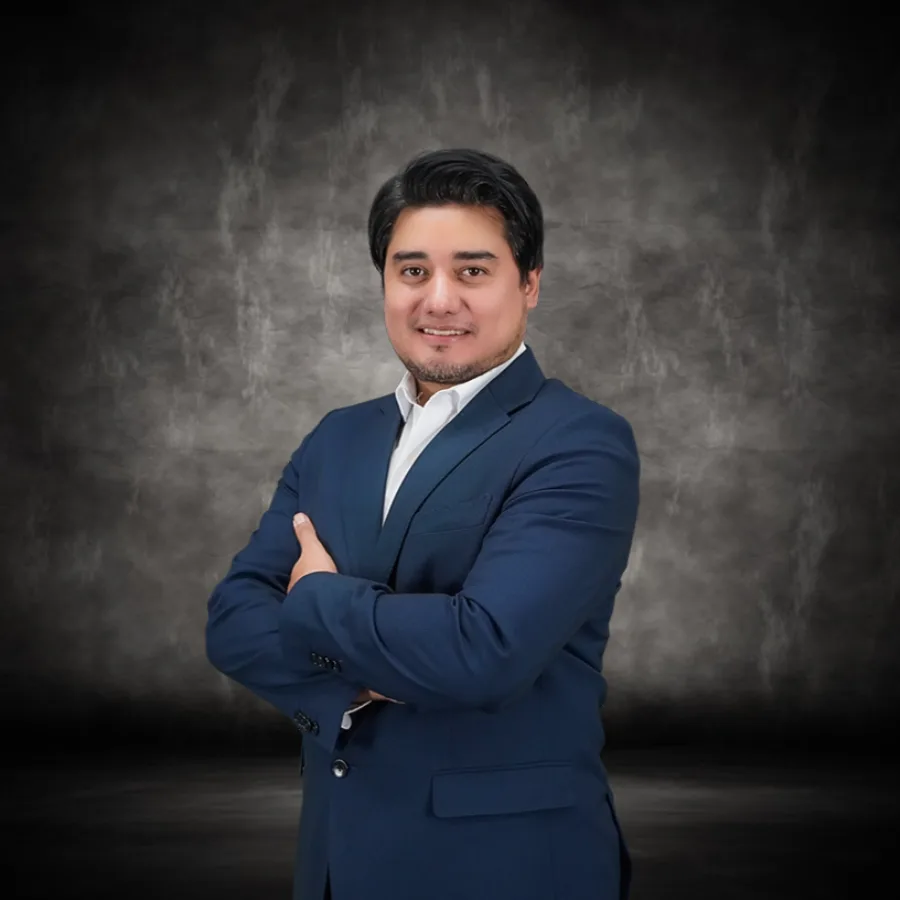
Dr. Alfredo Chama Naranjo — plastic, aesthetic and reconstructive surgeon in Tijuana, Mexico.
- Specialty professional license (Mexican Ministry of Education, SEP): 14854088 — plastic and reconstructive surgery, National Autonomous University of Mexico (UNAM), verifiable on the SEP public registry.
- Board certification by the Mexican Council of Plastic, Aesthetic and Reconstructive Surgery: CMCPER No. 2607, verifiable on the council’s website. The CMCPER is Mexico’s national board for plastic surgery — the counterpart of board certification in the United States.
- Operates in a certified hospital setting in Tijuana.
Last updated: 2026-09-21
Related Procedures


Schedule your virtual consultation
Your quote is personalized. Message us and we’ll guide you — in English or Spanish.
WhatsApp +52 664 585 1602*Schedule your virtual consultation with Dr. Chama.*
Consultation
Schedule your consultation
Direct attention from Dr. Alfredo Chama's team, board-certified plastic surgeon in Tijuana. Message us or call to schedule your appointment.
or if you prefer, directly:
Last updated: September 23, 2026