
Masculinization and chest surgery (top surgery)

If you’re looking to align your chest and contour with your identity, here we explain what a masculinization plan can include, how it is defined with you during the evaluation, and what to expect from recovery — with clear information and no absolute promises.
What a masculinization plan can include
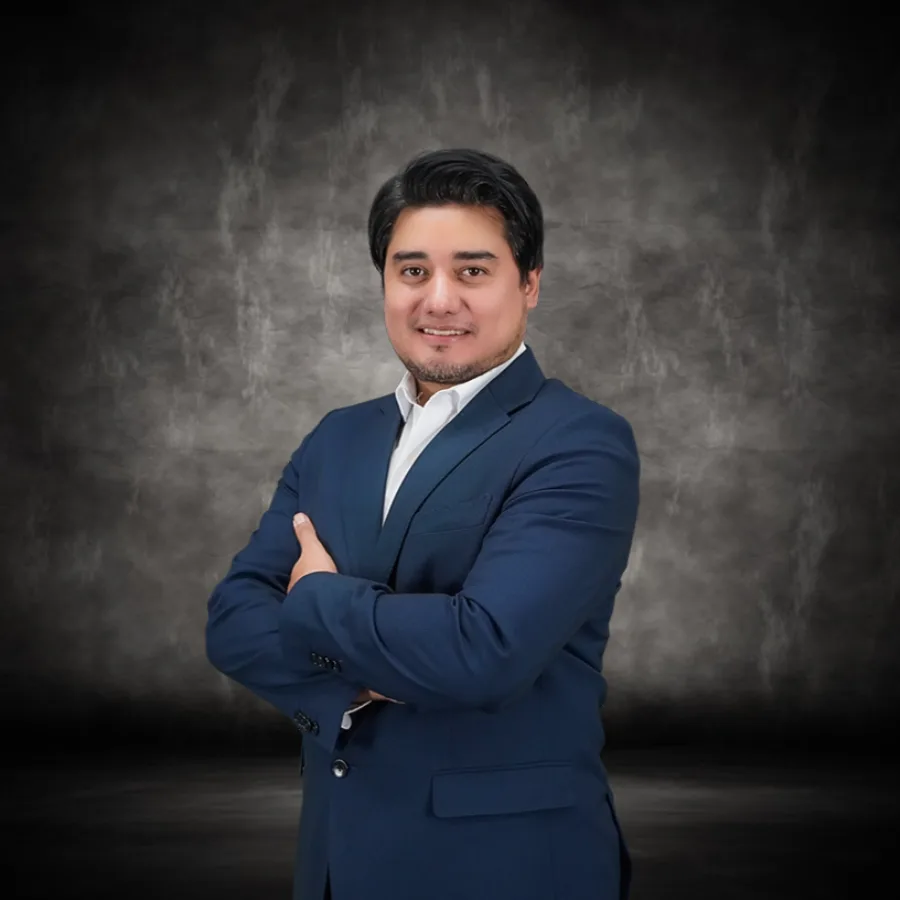
Masculinization aims to harmonize the chest and body contour with each person’s identity. Dr. Alfredo Chama Naranjo, a board-certified plastic surgeon, designs an individual plan based on your anatomy and your goals, in Tijuana, minutes from the San Ysidro border crossing.
The central component is usually masculinizing chest surgery — known as top surgery — which works on the chest contour and adjusts the position and size of the areola and nipple based on the technique indicated for your case. When applicable, the plan may include complementary body contouring.
The exact scope — which technique, what is included, what is not — is defined during your evaluation, not before. Every anatomy responds differently, and the decision is made with you, not from a catalog.
Individual, in a hospital setting, with follow-up
Your plan starts from your goals and a complete medical evaluation; there is no standard procedure for all cases. The technique and extent of work are adjusted to your anatomy and what you are looking to achieve.
Surgery is performed in a hospital setting, with the corresponding safety standards and with post-operative follow-up planned from before the surgery, not improvised afterward.
Care is dignified and confidential at every stage: from the first consultation to the last follow-up, your information and your process are handled with discretion.
What to expect from recovery
Recovery varies depending on the technique chosen and on each patient — there is no single calendar that applies to all cases. During your consultation, what to expect at each stage is explained in detail, along with how post-operative care is managed.
Consultation
Virtual or in-person evaluation of your case
Preparation
Personalized plan, tests, and preparation
Procedure
Hospital setting, certified team
Recovery
In-person or remote follow-up from the U.S.
Follow-up can be in person or remote, depending on your case and your location. If you’re traveling from the United States, this is coordinated so that distance does not become an obstacle to your care.
How we share results
We share real results only with written informed consent, in accordance with NOM-004. The gallery is in preparation while the consent process is completed with each patient who decides to share their case.
This policy is not a minor formality: it protects your privacy and that of every person who entrusts their story to the practice. We prefer to move slowly and well, rather than display anything before having the corresponding consent.
Local and U.S. patients
We treat patients in Spanish and English, both from Tijuana and those traveling from the United States. The office is at Plaza Península, minutes from the San Ysidro crossing, and the entire process — consultation, planning, and follow-up — is bilingual.
You can start with a virtual consultation without needing to travel for the first conversation; there, you share your goals and the doctor evaluates, answers questions, and explains options.
Frequently asked questions
What does a masculinization or top surgery plan include?
It almost always includes masculinizing chest surgery (chest contour and areola/nipple adjustment); when applicable, it may include complementary body contouring. The exact scope is defined during your evaluation, based on your anatomy and your goals.
Is the surgery safe?
Like any surgery, it has risks that are explained during your evaluation. Dr. Chama is a board-certified plastic surgeon and operates in a hospital setting. Safety starts with an individual evaluation and a plan tailored to your case.
Can I start with a virtual consultation?
Yes. The first conversation is remote: you share your goals, the doctor evaluates and explains options, without you having to travel for that first conversation.
How much does top surgery cost?
It is defined during your evaluation, because it depends on the actual scope of your plan. We prefer to give you a personalized quote rather than a generic figure that may not match your case. Message us on WhatsApp and we’ll be happy to guide you.
What is the recovery like?
It varies depending on the technique and each patient. During your consultation, what to expect is explained stage by stage, along with post-operative care, which can be provided in person or remotely.
When can I see before-and-after photos?
We share real results only with written informed consent (NOM-004). The gallery is in preparation; during your consultation, you may see examples as that process progresses.
Do you offer consultations in English?
Yes. Consultations, planning, and follow-up are all bilingual (Spanish and English) for local patients and those from the U.S.
Do many people regret this surgery?
The evidence says no: studies show that fewer than 1% of people who undergo gender-affirming surgery regret their decision (KFF; Bustos 2021 meta-analysis, 7,928 patients).
Frequently asked questions
Questions about top surgery / masculinization
What is masculinizing chest surgery (top surgery)?
It is a masculinizing mastectomy: breast tissue is removed and the skin is reshaped to achieve a flat, masculine-appearing chest contour. It is part of the gender affirmation process for transmasculine individuals and is planned individually based on your anatomy and your goals.
Am I a candidate for this procedure?
Generally, it is evaluated in adults in good health with clear expectations about the result. During your consultation, Dr. Chama reviews your medical history, the amount and elasticity of your tissue, and defines the most suitable technique with you. Candidacy is always confirmed after an in-person or virtual evaluation.
Do you require letters or a mental health evaluation?
Mental health support is a customary part of gender affirmation processes and helps ensure the decision is informed and sustained over time. Specific requirements are reviewed during your evaluation; the goal is for you to arrive at surgery with an organized process, not to put obstacles in your way.
How is the surgery performed and what type of anesthesia is used?
It is a surgical procedure performed in a hospital setting under general anesthesia with an anesthesiology team. The specific technique (for example, with or without areola repositioning) depends on your anatomy and is defined during your evaluation.
Does it leave a scar? Where?
Yes, every surgery of this type leaves a scar; its location depends on the technique. It is usually placed in the fold or lower edge of the pectoral so it is as discreet as possible. The scar matures and lightens over months; its final evolution varies from person to person.
What is the recovery like?
There will be swelling and discomfort in the first days, and a compression garment is typically required along with limiting physical exertion during the first weeks. The rest period and return to activities are defined during your evaluation based on your technique and your healing pace; post-operative check-ups accompany the process.
Does it hurt?
It is honest to say there is discomfort, especially in the first days, but it is manageable with the prescribed pain medication. Most people describe it more as pressure or tightness than intense pain, and it subsides over the days.
What are the risks?
Like any surgery, there are risks: bleeding, infection, fluid accumulation, sensitivity changes in the chest or areola, and scarring different from what was expected. During your evaluation, these are explained in detail for your case; post-operative follow-up exists precisely to detect and address them promptly.
How long do the results last?
The masculine contour achieved is long-lasting, since breast tissue is removed. Significant weight changes or hormonal factors may influence the appearance over time. This is a stable, long-term result, not a procedure that needs to be repeated routinely.
I’m coming from the United States — how does the crossing and recovery work?
We treat many people who travel from the U.S. The typical approach is to coordinate the evaluation, surgery, and at least the first follow-up appointments so that your stay in Tijuana is what is necessary, and to give you clear instructions for post-operative care at home. During your evaluation, the follow-up appointment schedule is organized based on your case.
Can I start with a virtual consultation?
Yes. You can start with a virtual consultation to learn about your case, answer questions, and guide the plan. Before surgery, an in-person evaluation is always conducted for the physical examination, which confirms the technique and final details.
How much does it cost?
The cost is defined after your evaluation, because it depends on the technique and the characteristics of your case; we do not publish prices or ranges. Message us on WhatsApp and we’ll be happy to guide you on the next step to schedule your evaluation.
Consultation
Schedule your consultation
Direct attention from Dr. Alfredo Chama's team, board-certified plastic surgeon in Tijuana. Message us or call to schedule your appointment.
or if you prefer, directly:
Your Care Continues After Surgery
- Follow-up appointments with Dr. Chama
- Conveniently located near the San Ysidro border crossing
- Direct line for any post-op questions: +52 664 585 1602
- Detailed recovery guide before you travel home
Your safety and recovery are Dr. Chama's priority — before, during, and after your procedure.
Last updated: September 13, 2026