Revision Rhinoplasty in Tijuana, Mexico
A second nose surgery is not a repeat of the first. It starts from what was changed, what scar tissue formed and how much support is left.

No image on this page depicts an actual patient or a surgical result. Editorial photography is used for illustration only.
Revision rhinoplasty (secondary rhinoplasty) with Dr. Alfredo Chama, plastic, aesthetic and reconstructive surgeon certified by the Mexican Council of Plastic, Aesthetic and Reconstructive Surgery (CMCPER No. 2607), in Tijuana, just across the border from San Diego.
What it’s for
What a revision rhinoplasty is for, and what it isn’t
Revision rhinoplasty is surgery on a nose that has already been operated on — once or more, by the same surgeon or by another one. It is more demanding than a first rhinoplasty for three reasons: there is scar tissue inside the nose, some cartilage and bone were already removed or reshaped, and the original anatomy has changed. Planning a revision in Tijuana or anywhere else starts with understanding what was done before.
Patients usually look for a revision rhinoplasty in Mexico for one or more of these reasons:
- Shape: a hump that remains, a bridge that was over-reduced, a tip that looks pinched, too upturned or too full above the tip, or a nose that is not straight.
- Breathing: difficulty breathing that started or got worse after the first surgery.
- Support: parts of the nose that collapse or look weak when breathing in.
- Asymmetry of the nostrils or the tip.
Because some of the original cartilage may be gone, a revision often needs grafts to rebuild support. If the septum was already used in the first surgery, the graft may need to come from another site; which one is decided for your case.
What a revision is not: it does not guarantee a perfect nose, and it is not the answer to a nose that is still swelling from the first surgery. Sometimes the honest answer is to wait.
Benefits
What it changes
- Shape corrections: refining the tip, the bridge or the asymmetry that bothers you.
- Breathing and appearance together: when function was affected, it is assessed in the same plan.
- Support rebuilt: grafts can restore structure where cartilage was lost.
- A plan based on your history: what was done before determines what can be done now.
Candidacy
Who is typically a candidate, and who should wait
- ✓ Your previous nose surgery has fully settled.
- ✓ A clear concern: shape, breathing, support or asymmetry.
- ✓ Good general health; non-smoker, or willing to stop for the weeks around surgery and during recovery.
- ✓ Realistic expectations: improvement within what your tissues allow.
- ✓ Your medical history and, if possible, records from the previous surgery.
Who should wait: anyone still within the first months after the previous rhinoplasty, or with swelling that has not yet resolved.
| First (primary) rhinoplasty | Revision rhinoplasty | |
|---|---|---|
| Starting point | Untouched anatomy | Anatomy already changed, scar tissue |
| Cartilage available | Usually enough in the septum | May be limited; grafts often needed |
| Planning | Based on your goals | Based on your goals and on what was done before |
| Recovery | Swelling settles over months | Often slower to settle |
Consultation
Virtual or in-person assessment of your case
Preparation
Personalized plan, labs, and pre-op instructions
Procedure
Hospital setting, certified surgical team
Recovery
Follow-up in person or remotely from the U.S.
How the process works, step by step
- Virtual review of your case. Send photos (front, both profiles and from below) and, if you have it, the operative report of your previous surgery through WhatsApp. Dr. Chama reviews your case and tells you whether a revision makes sense now or later.
- Timing. The nose takes a long time to settle after surgery, especially the tip, so revisions are usually planned once swelling has resolved — often a year or more after the previous operation. Dr. Chama sets the timing for your case.
- Written plan. What will be corrected, whether grafts are needed and from where, anesthesia and dates.
- Surgery in Tijuana. In a certified hospital setting.
- Follow-up. Splint removal and check-ups in person, then follow-up by WhatsApp or video from the U.S., with in-person visits when needed.
Your stay and follow-up (for patients crossing or flying in)
- Nights in Tijuana: Dr. Chama confirms the number for your case in your written plan, taking the splint removal into account.
- Records: you can request a clinical summary of your case so any physician back home can continue your care if needed.
- Recovery-house stay and ground transport can be arranged for out-of-town patients — ask on WhatsApp.
Dr. Chama discusses every risk, complication rate, and realistic expectation at your consultation — before you decide. A medical site that only shows results and omits risk is not giving you complete information.
Not happy with your nose after surgery? Start with a virtual review of your case. Send your photos on WhatsApp in English or Spanish; Dr. Chama reviews them before the appointment.
Frequently asked questions
What patients ask us most
How soon after my first rhinoplasty can I have a revision?
Usually once the nose has settled, which often takes a year or more because the tip is the last part to lose swelling. Operating earlier makes the result harder to predict. Dr. Chama sets the timing after reviewing your case.
Can you revise a rhinoplasty done by another surgeon?
Yes. Secondary rhinoplasty on a nose operated on by another surgeon is part of Dr. Chama’s practice. He asks for whatever information you have about the first surgery and tells you plainly what can be improved.
Will I need cartilage grafts?
Often, because some cartilage was removed in the first surgery. If the septum still has enough, it is used first; if not, the graft may come from another site. The source is decided for your case and explained before surgery.
Can breathing problems be fixed in a revision?
When the difficulty comes from the structure of the nose, it is assessed and, where possible, addressed in the same operation. The evaluation checks whether the cause is structural or something else.
Is a revision riskier than a first rhinoplasty?
It is more complex. Risks include bleeding, infection, prolonged swelling, asymmetry, changes in sensation of the tip, breathing changes and the possibility of needing another adjustment later. Scar tissue makes precision harder. They are discussed for your specific case before you decide.
Open or closed approach?
Many revisions use the open approach because it gives direct access to scar tissue and to the structures that need rebuilding. The approach is chosen for your case.
How long do I need to stay in Tijuana?
Long enough to be checked after surgery and, usually, to have the splint removed. Dr. Chama confirms the number of nights in your written plan.
Can I get a quote before traveling?
Yes. Send photos and your history on WhatsApp; after reviewing your case you receive a personalized quote.
About the surgeon
Dr. Alfredo Chama Naranjo
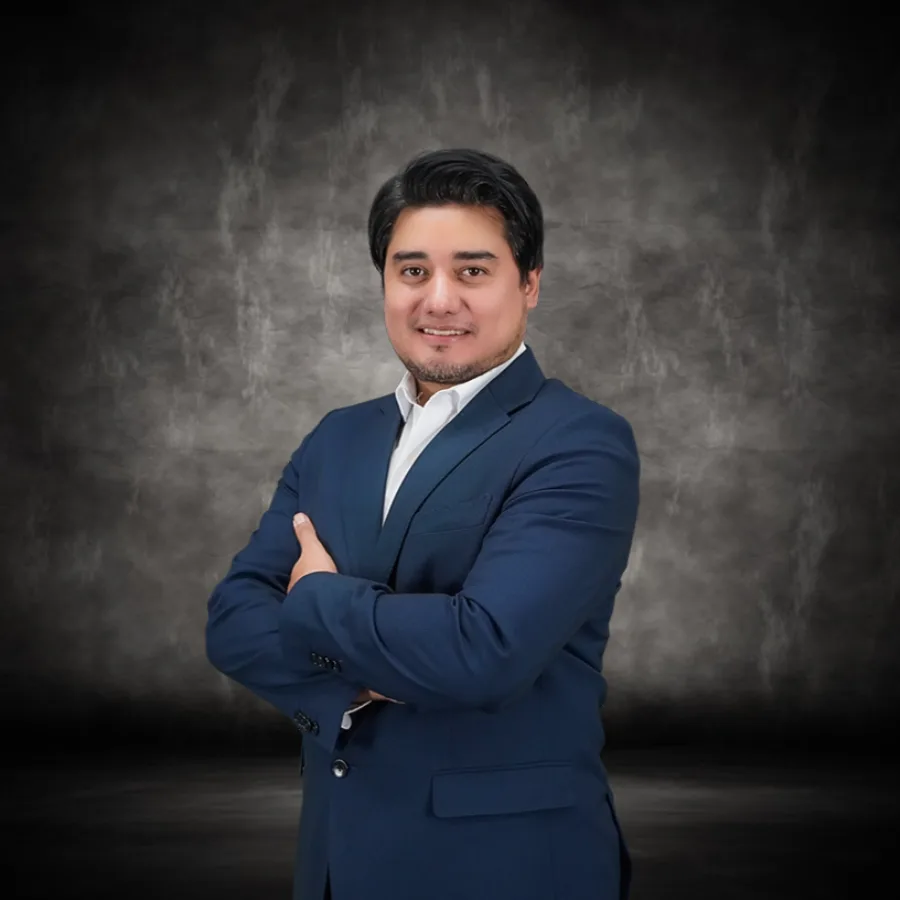
Dr. Alfredo Chama Naranjo — plastic, aesthetic and reconstructive surgeon in Tijuana, Mexico.
- Specialty professional license (Mexican Ministry of Education, SEP): 14854088 — plastic and reconstructive surgery, National Autonomous University of Mexico (UNAM), verifiable on the SEP public registry.
- Certified by the Mexican Council of Plastic, Aesthetic and Reconstructive Surgery: CMCPER No. 2607, verifiable on the council’s website. The CMCPER is Mexico’s certifying council for the specialty.
- Performs primary, ultrasonic and secondary (revision) rhinoplasty.
- Operates in a certified hospital setting in Tijuana.
Last updated: 2026-09-23
Related Procedures


Schedule your virtual consultation
Your quote is personalized. Message us and we’ll guide you — in English or Spanish.
WhatsApp +52 664 585 1602*Schedule your virtual consultation with Dr. Chama.*
Consultation
Schedule your consultation
Direct attention from Dr. Alfredo Chama's team, Mexican Council-certified plastic surgeon in Tijuana. Message us or call to schedule your appointment.
or if you prefer, directly:
Last updated: September 23, 2026