
Breast Reconstruction After Mastectomy in Tijuana
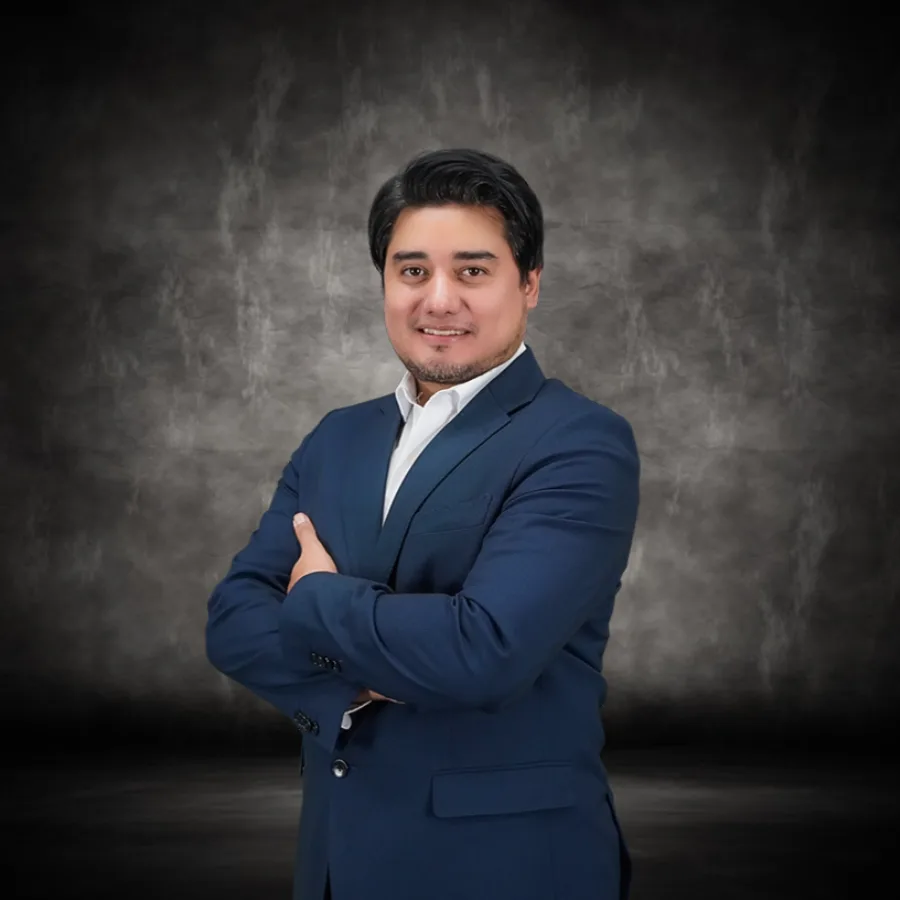
Breast reconstruction restores the shape of the breast after a mastectomy, using either an implant/expander or your own tissue. Dr. Alfredo Chama — a plastic surgeon board-certified by CMCPER (Board Certification No. 2607, SEP professional registration 14854088) — evaluates post-mastectomy reconstruction in Tijuana in coordination with your oncology team. Which technique family applies to your case, and whether it is performed here or referred, is defined in that joint assessment.

What it is, and when it happens
Reconstruction is part of your cancer treatment, not a separate decision
Breast reconstruction is the surgery that rebuilds the shape and volume of the breast after a mastectomy — the full or partial removal of breast tissue due to cancer — or, in some cases, after breast-conserving surgery that leaves a significant deformity. It is not a standalone cosmetic procedure: international clinical guidelines recognize it as part of comprehensive breast cancer care, at the same level as oncologic surgery or systemic therapy.
There are two possible timings, and the difference matters. Immediate reconstruction is performed in the same surgery as the mastectomy, coordinated between the oncologic surgeon and the plastic surgeon. Delayed reconstruction is done months or even years later, once oncologic treatment — chemotherapy, radiation — is complete, or whenever the patient decides to move forward.
Which option applies to your case is not an aesthetic preference: it depends on your cancer stage, whether radiation is part of your treatment plan, your oncologic surgeon’s availability the same day, and your own informed decision. That’s why the first step is always a joint evaluation with your oncology team, not a plastic-surgery decision made in isolation.
Your options
Implant/expander, or your own tissue (autologous flap)
Broadly speaking, there are two families of technique. Implant or tissue-expander reconstruction places an expander beneath the remaining tissue first, which is gradually filled over several office visits to create enough space; it is later exchanged for a permanent implant in a second surgery. This is the more common route when the skin and remaining tissue are in good condition and extensive radiation to that area hasn’t happened or isn’t planned.
Autologous flap reconstruction uses your own tissue — almost always from the abdomen — to rebuild the breast without leaving an implant. The DIEP flap (Deep Inferior Epigastric Perforator) is the reference microsurgical technique in this group: it preserves the abdominal muscle, uses your own skin and fat, and over time it ages and behaves like natural tissue, not a prosthesis. In exchange, it’s a longer, more complex microsurgical procedure that requires specific training and its own recovery in addition to the donor site’s. Autologous microsurgical reconstruction requires a specific surgical team; whether that option is available for your case is confirmed in your assessment.
There is no technique that’s “better” in the abstract. The choice depends on your anatomy, whether you received or will receive radiation — which complicates implant-based reconstruction — the amount of donor tissue available if a flap is considered, and your own priorities around recovery time, number of surgeries, and how natural the result feels. That conversation, with both options on the table, is exactly what should happen in your assessment.
Who it’s for
Candidacy is decided with your oncology team, not in isolation
- You have had, or will have, a mastectomy or breast-conserving surgery that left a significant deformity.
- Your overall health, cancer stage, and treatment plan have been reviewed with your oncologist.
- You understand whether radiation is or isn’t part of your plan — it directly affects which technique applies.
- If considering a flap, you have adequate donor tissue (commonly the abdomen).
- You have realistic expectations: reconstruction restores shape and volume, not an identical copy of the original breast.
- Reconstructing is a personal decision, never an obligation.
The information gap
Deciding with complete information
A meaningful share of patients want reconstruction, but research on this care gap suggests that only a smaller fraction receive a referral or a sufficient explanation of their options at the time of mastectomy — a gap in information, more than in desire. Published estimates for Mexico suggest that only a small share of mastectomized patients access any form of reconstruction, well below the standards documented in other countries.
This page exists with that gap in mind: not as a pricing funnel, but as a place where any patient — wherever she lives, whenever she decides — can understand with medical clarity what reconstruction involves, so that choosing not to do it, or postponing it, is an informed decision rather than a gap in information.
How many surgeries
Reconstruction is rarely a single surgery
Breast reconstruction is almost never resolved in a single procedure, and it’s worth understanding that from the start so you don’t measure the process against a single-surgery yardstick. The number of stages and the time between them depend on the technique chosen and your oncologic plan — especially whether chemotherapy or radiation is scheduled in between.
- Stage 1 — Primary reconstruction: placement of expander/implant or flap surgery, coordinated with the mastectomy or performed later.
- Stage 2 (if applicable) — Exchange of expander for permanent implant, weeks to months later, per your oncologic plan.
- Stage 3 — Symmetry procedures on the opposite breast when needed, so both sides match in shape and position.
- Stage 4 — Nipple and areola reconstruction, the final stage, once the primary result has settled.

No image on this page depicts an actual patient or clinical result. Editorial images are used for illustration only.
Dr. Chama discusses every risk, complication rate, and realistic expectation in your assessment — before you decide. A medical site that only shows results and skips the risks is not giving you complete information.
Risks and considerations
Honesty first
Like any major surgery, breast reconstruction carries risks that are reviewed in detail in your assessment, and they vary by technique:
- Infection or delayed wound healing, more common when there was prior radiation to the area.
- Capsular contracture around the implant, which can require revision surgery over time.
- Flap-specific complications, including the uncommon but serious possibility that the transplanted tissue doesn’t receive enough blood flow and requires urgent management.
- Asymmetry between both breasts, which in some cases is corrected with an additional procedure on the opposite side.
- Changes in sensation in the reconstructed area, which can be permanent.
- Need for revision surgery over the years, especially with implant-based reconstruction.
- General risks of major surgery and anesthesia, explained individually based on your history.
For patients from the United States
Why a virtual consultation is usually the first step
Most patients from the United States arrive after having already had their mastectomy performed in the U.S., looking for a second opinion or a delayed reconstruction. In those cases, the process typically starts with a bilingual virtual consultation to review your chart and imaging before crossing, followed by an in-person assessment to define technique and surgical calendar.
For patients being treated in Tijuana with a recent diagnosis, the process starts with an assessment that reviews your complete oncologic history — diagnosis, stage, treatment plan — in coordination with your oncologic surgeon and medical oncologist, to define whether immediate reconstruction is viable or whether delayed reconstruction is the better plan once systemic treatment concludes.
Recovery logistics follow the same logic as any major surgery in Tijuana — just across the San Diego border: plan to stay nearby for the first few days after each stage, arrange a companion, and leave margin in your travel calendar, especially if your plan includes several surgeries spaced over time.
What to ask in your consultation
- Which reconstruction technique fits my anatomy and my oncologic plan best?
- Does immediate or delayed reconstruction make more sense in my case, and why?
- How many surgeries will I need in total, and in what order?
- How does scheduled radiation or chemotherapy affect the timing of reconstruction?
- What happens with symmetry on the other side, and with nipple reconstruction?
- How is follow-up coordinated if I live outside Tijuana?
Frequently asked questions
What patients ask us most
Is breast reconstruction the same as breast augmentation?
No. Reconstruction rebuilds a breast after a mastectomy for cancer, within your oncologic treatment. Breast augmentation is a cosmetic procedure for patients without an oncologic diagnosis. They share some surgical techniques, but the medical goal and the prior evaluation are different.
Do I need to reconstruct at the same time as my mastectomy?
Not necessarily. Immediate reconstruction happens in the same surgery as the mastectomy when the case allows it; delayed reconstruction happens afterward, often once oncologic treatment is complete. Which one fits depends on your stage, your treatment plan, and your own decision, reviewed together with your oncology team.
Which is better, implant or autologous flap (DIEP)?
Neither is superior in the abstract. An implant usually means a shorter surgery in two stages; a DIEP flap uses your own tissue, leaves no prosthesis, and usually tolerates radiation better, in exchange for a longer microsurgical procedure. The right technique depends on your anatomy, your oncologic plan, and your priorities, decided together in your assessment. Autologous microsurgical reconstruction requires a specific surgical team; whether that option is available for your case is confirmed in your assessment.
How long does the entire reconstruction process take?
It varies by technique and your oncologic plan. With an expander, several months of gradual filling typically pass between the first surgery and the exchange for a permanent implant. With an autologous flap, the primary reconstruction can often be completed in a single, longer surgery. In both cases, nipple reconstruction and symmetry adjustments are later stages.
Does reconstruction interfere with cancer recurrence monitoring?
That’s a valid question best answered together with your oncologist, since surveillance depends on your specific case and isn’t defined by plastic surgery alone. It’s exactly the kind of question worth resolving before choosing a technique, in coordination with your treatment team.
How much does breast reconstruction cost in Tijuana?
It depends on the number of stages, the technique chosen, and your specific oncologic plan, so we don’t publish a generic figure that may not match your case. We prefer to give you a personalized quote after reviewing your chart. Message us on WhatsApp and we’ll guide you.
Can I reconstruct years after my mastectomy?
Yes. Delayed reconstruction can be planned months or even years after a mastectomy — there is no fixed deadline. What does matter is an assessment that reviews the condition of your skin, tissue, and oncologic history before defining the most appropriate technique at that point.
I live in the U.S. — how do I start?
We see patients in English and Spanish and can start with a virtual consultation to review your oncologic history before you cross. Most plans require staying near Tijuana for several days after each surgical stage; follow-up afterward can be coordinated remotely.
Related Procedures




Schedule your virtual consultation
Your quote is personalized. Message us and we'll guide you, no commitment.
WhatsApp +52 664 585 1602Consultation
Schedule your consultation
Direct attention from Dr. Alfredo Chama's team, board-certified plastic surgeon in Tijuana. Message us or call to schedule your appointment.
or if you prefer, directly:
Last updated: September 19, 2026